perennial-rye-grass-seed
Pile of Perennial Rye Grass Seed
Perennial Rye Blend Grass Seed Callouts
Uncoated Grass Seed in Hands
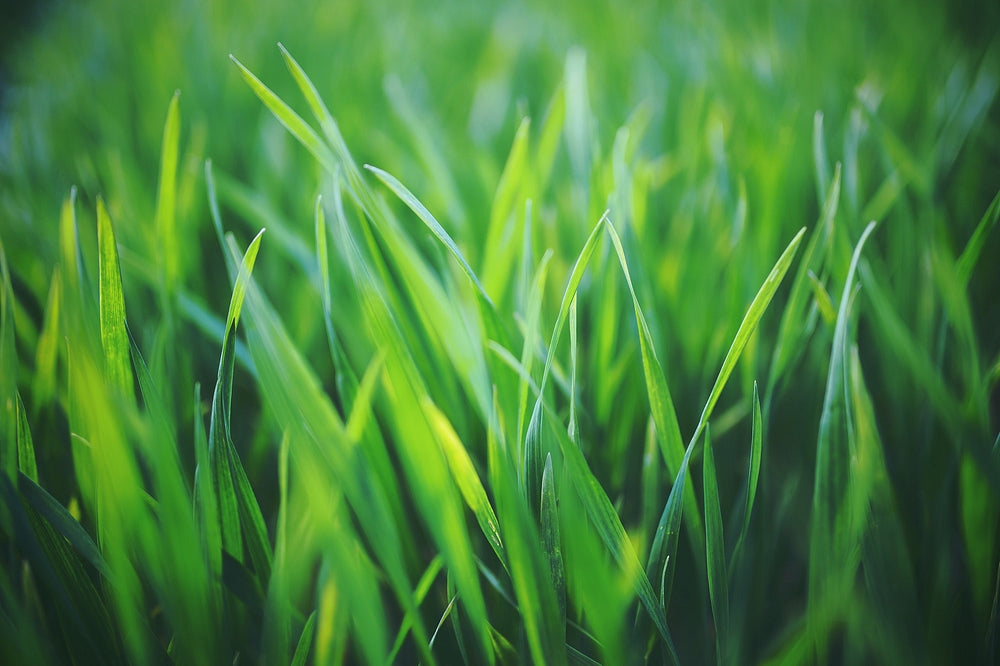
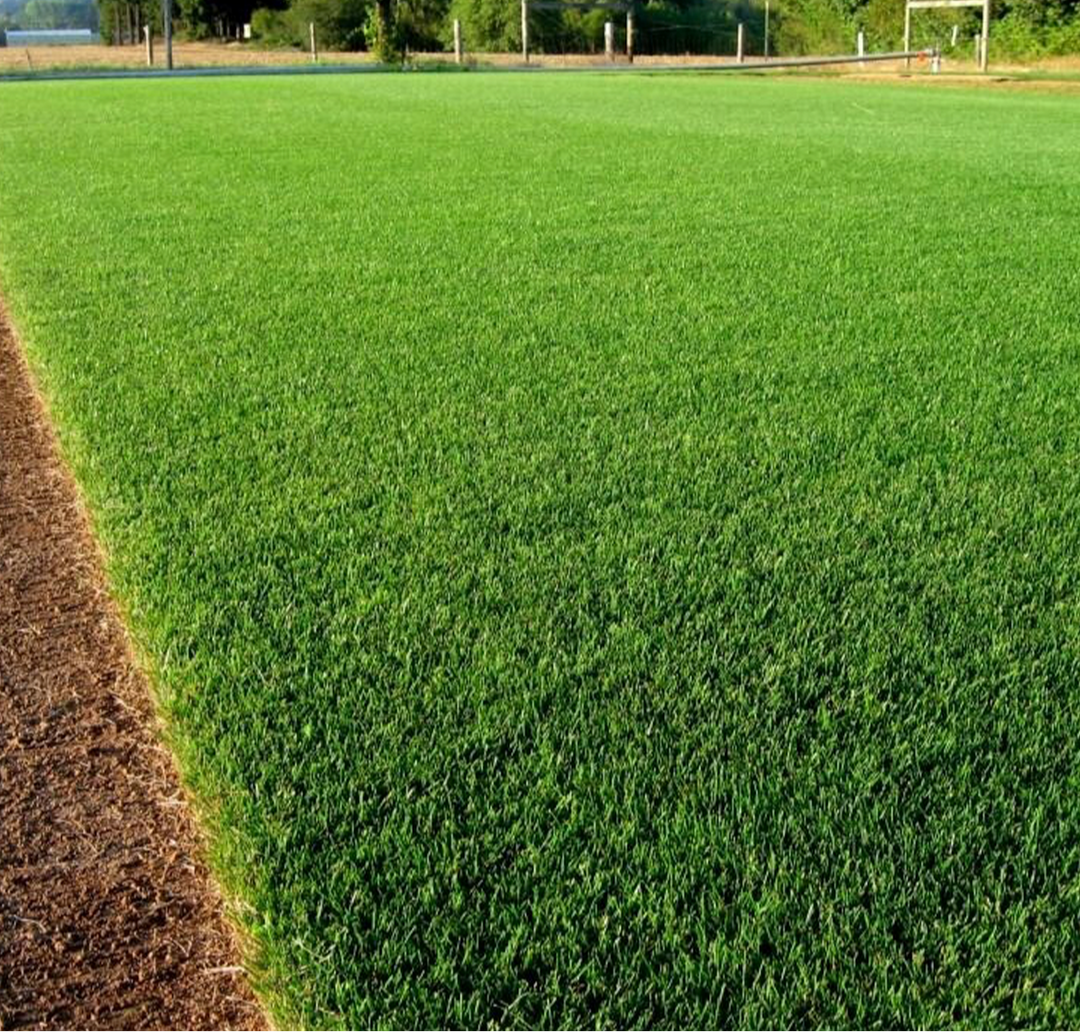
Perennial Rye Grass
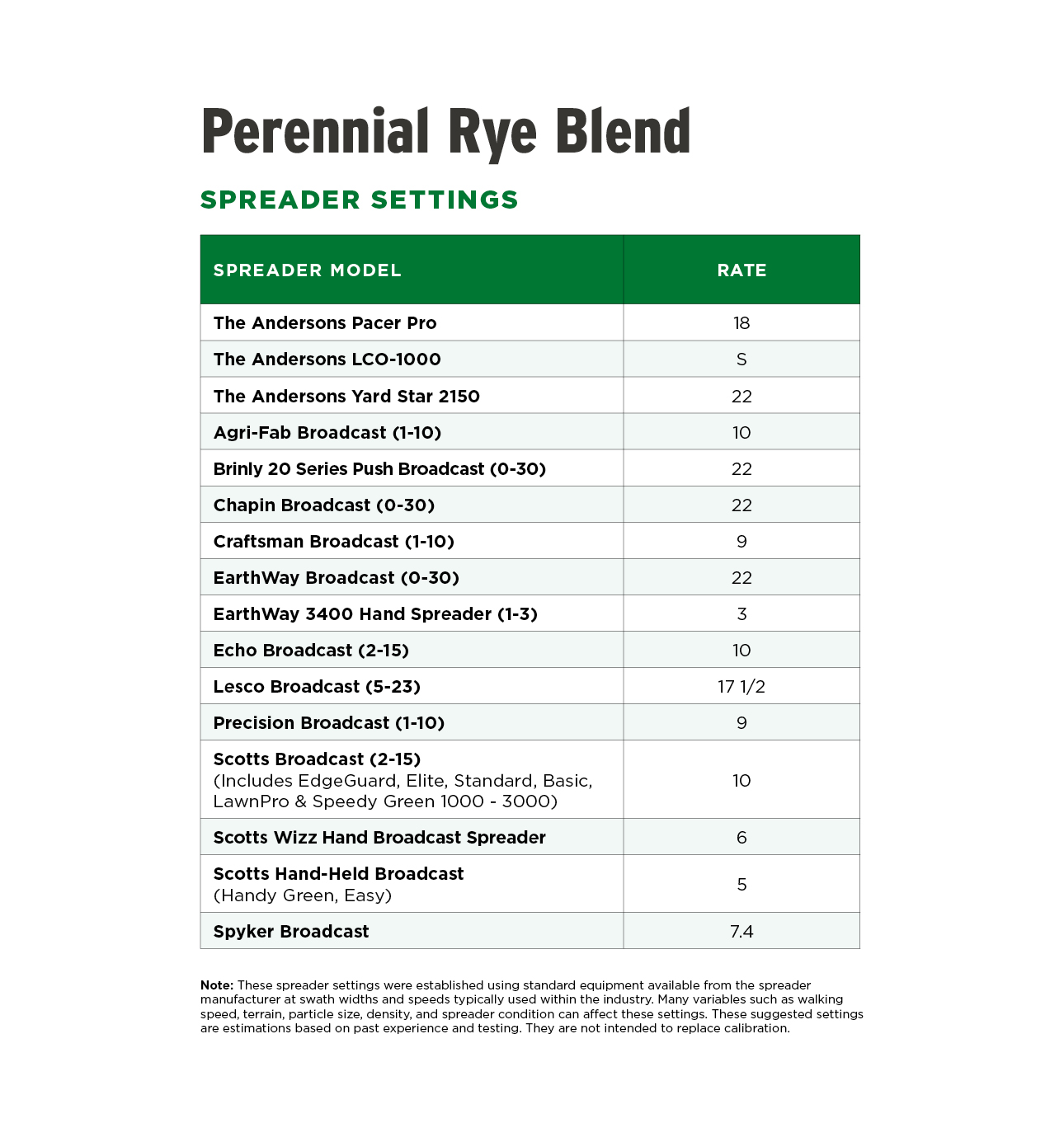
Perennial Rye Blend Spreader Settings Table
Made In The USA
Registered In All States

Perennial Rye Blend

Premium Grass Seed

Weight
  • <strong>In Stock.</strong> Usually ships in 1 business day.
  • Sold Out. Enter your email address below and we will let you know when the product becomes available.
  • Backordered, shipping soon
$99.88
/
Regular price

Shipping box icon gray

Free Shipping on All Orders

American flag icon gray

Made in the USA


Overview

  • Deep green color
  • Disease resistant
  • Better cold tolerance
  • Excellent density
  • Ideal for overseeding applications
  • Can be used in both cool-season and warm-season turf locations
  • Contains 0.00% weed seed
  • A low-input, A-LIST Seed

Seeding with Perennial Rye Blend

PLANTING A NEW LAWN

  • Rototill the soil to a depth of 4-6 inches. Soil should be loose and clod-free.
  • Level the area to eliminate high or low spots then roll to firm the soil.
  • Sow the grass seed at the recommended rate (see analysis tag on bag).
  • Cover the seed with peatmoss or straw and rollover seed to get good seed-to-soil contact.
  • Moisten the soil to a depth of around 1 inch. Keep the root zone moist by watering 2 to 3 times per day (rainfall depending). Avoid creating puddles. Keep soil moist until the new lawn has fully germinated - 3 to 4 weeks.
  • New grass seedlings will begin to emerge in 7 to 10 days after seeding. Do not mow until your lawn is 3” to 4” tall – usually about 3 weeks from the time of planting.
  • For new seeding at 7lbs. per 1,000 sq. ft., a 25 lb. bag will cover 3,571 sq. ft.
Perennial Rye Grass
Uncoated Grass Seed in Hands

OVERSEEDING

Overseeding can be done annually to help keep your lawn healthy and thick.

  • Mow lawn to 0.5-1 inches and remove clippings.
  • Rake to loosen the soil and break apart thatch. Remove debris.
  • Apply seed evenly over the entire lawn at the recommended rate.
  • Keep the soil moist until the new seed germinates.
  • For overseeding at 5lbs. per 1,000 sq. ft., a 25 lb. bag covers 5,000 sq. ft.

PATCH REPAIR

  • Rake the spot to loosen the soil and break apart thatch. Remove debris.
  • Spread the seed on the spot.
  • Cover with peat moss, straw or compost.
  • Keep the area moist until the seed has germinated, approximately 2 to 3 weeks.

Spreader Settings

We recommend using a broadcast spreader. These spreader settings are a guide. Many variables such as walking speed, terrain, particle size, density, and spreader condition can affect these settings. Be sure to calibrate your spreader before every application.

Frequently Asked Questions

In warm-season locations, the ideal time to seed is May-July.

In cool-season locations, the ideal time to seed is in September-October when air temperatures are still staying above 55 degrees. You may also seed in the spring when soil and air temperatures stay consistently above 55 degrees - typically late-April.

After seeding: Avoid applying a weed and feed at least 30 days after the seeds germinate, or after the seedings' first mow, which ever is longer.

Before seeding: Avoid seeding until 30 days after a weed and feed application.

Ensure to always read your weed and feed's label for application timing around seeding.

Yes, a fertilizer and a soil amendment is recommended to be applied while seeding. A starter fertilizer, like New Lawn Starter 20-27-5, or a balanced fertilizer, like Core™ 12-8-12, are great choices. A soil amendment such as BioChar DG™ or HumiChar™ will help encourage seed germination. These products can be either worked into the soil while spreading the seed, or applied on top of the soil after raking the seed in. Water-in after applying these products.

Pre-emergent will inhibit new grass growth if it is applied too close to seeding. If you plan on seeding in the spring, forgo your spring pre-emergent application. If you plan on seeding in the fall, forgo your fall pre-emergent application. Ensure to always read your pre-emergent's label for application timing around seeding.

Reviews

Overall rating: 4.8 / 5 from 5 reviews.

AI Generated Review Summary

Summary topics

Review topics: [].

Review highlights

Reviews

Fantastic Product.

"Fantastic Product."

Brian T. (5/5)

I dont know yet. We

"I dont know yet. We will see when the grass starts growing. Shipping went well"

Kevin B. (4/5)

Great looking results so far!

"I used a lot of seeds, started off with big box store seeds which contained weed seed mixed with grass seed that would barely germinate. This seed has a very good blend(s) of rye grass, which looks wonderful after it germinates. it takes about a week or so for it to germinate but when it does it looks wonderful. Can't wait to see how better it gets from there."

Amran (5/5)

Perennial rye grass blend

"I planted The Andersons Perennial Rye Blend on my lawn, and the results were spectacular. It grew into a lush, deep green turf with impressive density and great disease resistance, making my yard look stunning year-round. Highly recommend!"

Brian C. (5/5)

Good seeds

"Good seeds germinate fast and well…"

Ranjan S. (5/5)

Q&A

How does that hole up in the dummer months please and thanks
Perennial Rye performs can become stressed and dormant during summer heat, turning brown if temperatures are too high or water is insufficient.
How much does a 25 lb bag cover on per square foot
For new seeding at 7lbs. per 1,000 sq. ft., a 25 lb. bag will cover 3,571 sqft. For overseeding at 5lbs. per 1,000 sq. ft., a 25 lb. bag covers 5,000 sqft.
I live in Saint louis, it gets extremely hot here will this work on my lawn, it get upwards of 100f
For cool-season grasses, the ideal soil temperature is between 55-65°F. For your location, the best time to seed based on soil temperature is early October.
How does this do in shady or partial shady areas?
Perennial ryegrass generally prefers full sun and may struggle in fully shaded areas. While it can tolerate partial shade, it&#x27;s not ideal for areas with little to no sunlight.
Will this grow in shaded areas like some fescues do?
The Perennial Rye Seed Blend can grow in partial shade but does best in full sun. It will not grow well in fully-shaded areas.

Other Customer Favorites